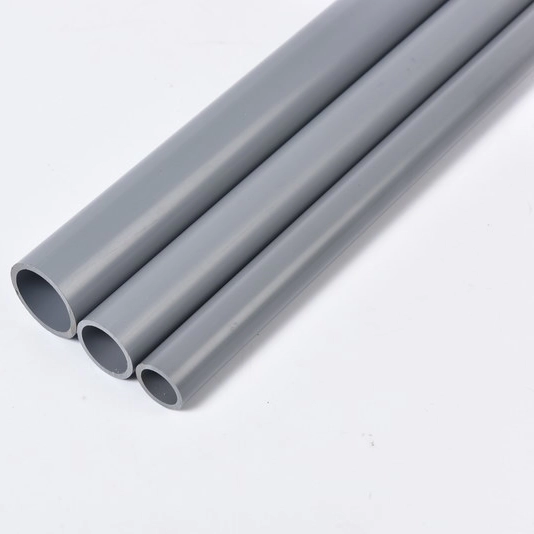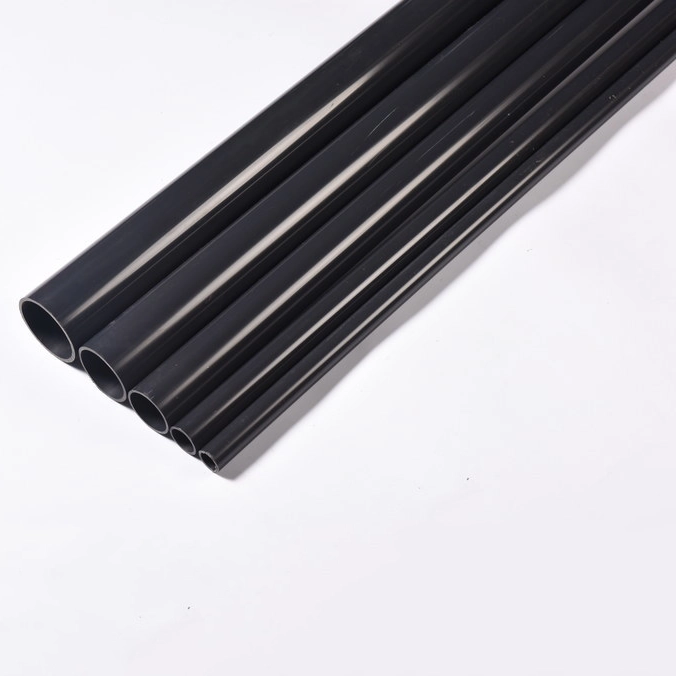
In modern industrial engineering, material selection plays a decisive role in ensuring system efficiency, operational safety, and long-term reliability. Among the many thermoplastic materials available today, PPH (Polypropylene Homopolymer) pipes have emerged as one of the most dependable choices for applications involving corrosive media, elevated temperatures, and demanding installation conditions.
From chemical processing and wastewater treatment to high-purity fluid transport, PPH piping systems are now widely adopted in environments where metal pipes corrode too quickly and conventional plastics fail under stress. But what exactly makes PPH such a valuable material? And in which industrial scenarios does it truly outperform alternatives?
This article takes a deep dive into the science, performance characteristics, and practical applications of industrial PPH pipes — providing engineers, project managers, and technical professionals with a comprehensive understanding of when and why PPH should be the material of choice.
Understanding the Material: What Makes PPH Unique?
Molecular Structure and Material Behavior
PPH, or Polypropylene Homopolymer, is a semi-crystalline thermoplastic composed exclusively of propylene monomers. This results in a highly uniform molecular structure that provides:
- Higher crystallinity
- Superior chemical resistance
- Greater rigidity and mechanical strength
- Enhanced resistance to stress cracking
Compared with PP-R and PP-B (copolymers), PPH offers significantly improved tensile modulus, making it ideal for industrial applications where pipe deformation or structural weakness can lead to operational risks.
PPH vs. Other Polyolefin Materials
PPH is often compared to materials such as HDPE, PP-R, and PP-B. Each material has its place, but PPH stands out when the environment becomes chemically aggressive or thermally demanding:
| Material | Strength | Chemical Resistance | Heat Resistance | Industrial Use |
|---|---|---|---|---|
| PP-R | Good | Moderate | Good | Domestic water systems |
| PP-B | Flexible | Moderate | Moderate | Drainage applications |
| HDPE | Flexible | Good | Fair | Water supply, agriculture |
| PPH | High | Excellent | High | Chemical + industrial systems |
In short:
If the environment is chemically aggressive, thermally elevated, or mechanically demanding — PPH is the superior choice.
Performance Characteristics That Make PPH Ideal for Industry
1. Exceptional Chemical Resistance
One of the primary reasons industries rely on PPH is its ability to withstand harsh media such as:
- Strong inorganic acids (HCl, H₂SO₄, HNO₃)
- Alkalis and caustics (NaOH, KOH)
- Salts and brines
- Solvents
- Corrosive gases and vapors
While metals corrode and PVC/CPVC degrade in certain chemicals, PPH remains chemically inert, ensuring long-term system stability.
2. High Temperature Endurance
PPH pipes can typically withstand continuous operating temperatures of up to 95°C, depending on pressure. This allows them to perform reliably in:
- Hot process streams
- Heated cleaning fluids
- Thermal treatment systems
- Industrial environments with elevated ambient temperatures
Unlike PVC, which softens, or CPVC, which becomes brittle under some conditions, PPH offers balanced thermal stability and mechanical reliability.
3. Mechanical Strength and Structural Stability
PPH displays:
- High tensile strength
- Strong impact resistance
- Impressive stiffness
- Low thermal expansion compared to other plastics
These qualities allow it to maintain structural integrity even in high-pressure environments, vibration-heavy facilities, or systems with frequent thermal cycling.
4. Hygienic and Purity-Safe Properties
PPH has extremely low extractable levels and a smooth, non-porous interior surface. This minimizes:
- Biofilm formation
- Bacterial growth
- Particle shedding
Making it well-suited for industries with purity requirements such as pharmaceuticals, food processing, and semiconductor manufacturing.
Industrial Environments Where PPH Pipes Are the Best Choice
Chemical and Petrochemical Plants
PPH is ideal for conveying:
- Acids
- Caustics
- Solvents
- Chemical wastes
- Corrosive vapors
Chemical process engineers prefer PPH because it:
- Does not corrode
- Is unaffected by most laboratory and industrial chemicals
- Provides stable, long-term performance
- Requires far less maintenance than metal systems
This reduces life cycle costs significantly.
Water Treatment and Desalination Facilities
PPH piping is used extensively in:
- Reverse osmosis systems
- Chemical dosing lines
- Brine transfer pipelines
- Effluent treatment systems
- pH control lines
Opposed to metals that corrode or PVC that degrades in high-salinity environments, PPH withstands aggressive water chemistry with ease.
Semiconductor and High-Purity Industries
PPH’s high purity and low contamination properties make it suitable for:
- Chemical delivery systems
- Ultra-pure water (UPW) transport
- Acid exhaust ducting
- Wafer-cleaning chemical circuits
Its excellent resistance to acids commonly used in semiconductor production makes it a trusted choice.
Pharmaceutical, Biotechnology, and Food Facilities
PPH meets stringent purity and hygiene requirements due to its:
- Non-toxic composition
- Smooth interior finish
- Resistance to chemical sanitization agents
It is frequently used in:
- CIP (Cleaning-in-Place) systems
- Process water lines
- Non-contaminating chemical transfer
Industrial Ventilation, Fume Extraction & Corrosive Gas Handling
PPH ventilation ducts provide safety in settings involving:
- Acid fumes
- Chlorinated vapors
- Chemical exhaust
- High-temperature emissions
Metals often fail quickly in these environments, while PPH maintains its dimensional and chemical stability.
Installing PPH Pipes: Practical Advantages
Lightweight for Easier Transport and Handling
Unlike stainless steel or even PVDF, PPH is extremely lightweight. This reduces:
- Labor requirements
- Installation time
- Equipment costs
It also minimizes the risk of handling injuries.
Reliable Welding and Joining Methods
PPH supports several professional joining techniques:
- Butt fusion
- Socket fusion
- Electrofusion
- Flanged connections
Fusion joints form a homogeneous, leak-free, monolithic system, essentially creating a single continuous pipe without weak spots.
Low Maintenance Over Its Service Life
PPH systems:
- Do not require anti-corrosion coatings
- Experience minimal flow rate reduction
- Show excellent long-term mechanical stability
This leads to lower overall operating costs — a major factor for industries seeking efficiency and reliability.
PPH vs Competing Materials: A Technical Comparison
PPH vs Stainless Steel
While stainless steel is durable, it suffers when handling:
- Chlorides
- Strong acids
- High-salinity media
PPH is immune to these problems and costs significantly less in installation and maintenance.
PPH vs PVC/CPVC
PVC is limited by:
- Temperature restrictions
- Brittleness at lower temperatures
- Incompatibility with certain chemicals
CPVC is better thermally but still more chemically limited than PPH.
PPH beats both in terms of stability, chemical compatibility, and lifecycle cost.
PPH vs PVDF
PVDF is excellent for ultra-high purity applications, but it’s:
- Considerably more expensive
- Often unnecessary for general industrial settings
PPH provides a balanced solution between performance and cost-efficiency.
Choosing a Reliable PPH Pipe Manufacturer
Selecting the right supplier is crucial for ensuring long system life and consistent performance.
What to Look For in a Manufacturer
A trusted PPH supplier should offer:
- Industrial-grade PPH raw materials
- Strict quality control and traceability
- Compliance with ISO, ASTM, DIN, and related standards
- Professional-grade fittings, valves, and accessories
- Experience serving chemical and water treatment industries
Why Sikerui Pipe Is a Strong Industry Partner
Sikerui Pipe, a professional manufacturer of PPH, CPVC, UPVC, and industrial plastic piping systems, is recognized for:
- High-performance PPH pipes designed for chemical and industrial applications
- Advanced manufacturing technology ensuring material purity and mechanical strength
- Reliable solutions used in water treatment, chemical plants, RO systems, and other harsh environments
- Excellent quality stability and long-term product reliability
Their full product range and technical expertise support global clients who require strong, corrosion-resistant, and dependable piping systems.
Learn more at: **https://sikeruipipe.com/**.
Conclusion
Industrial environments demand piping systems that can endure chemical exposure, temperature fluctuations, and mechanical stress — all without compromising safety or efficiency. PPH pipes meet these requirements exceptionally well, offering a level of durability and long-term performance that surpasses many traditional materials.
Whether it’s in chemical processing, water treatment, semiconductor manufacturing, or exhaust ventilation, PPH pipes consistently deliver stable, reliable performance. By choosing a reputable manufacturer such as Sikerui Pipe, industries gain access to high-quality PPH systems capable of withstanding some of the harshest operating conditions.