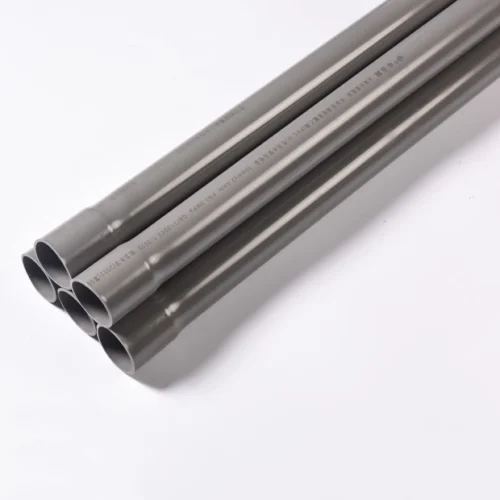
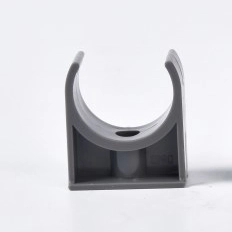
Pipe Clamps

Send Inquiry

Overview of Pipe Clamps

Pipe Clamps​ are fundamental fastening devices engineered to secure and support pipes in various configurations, ensuring stability, alignment, and safety within piping systems. These components are critical for preventing movement caused by vibrations, thermal expansion, and pressure fluctuations in applications ranging from residential plumbing to industrial process plants. Manufactured from robust materials including stainless steel, galvanized steel, and specialty plastics, pipe clamps are designed to meet international standards such as ASME B31.1 and B31.3, providing reliable performance under temperature extremes ranging from -34°C to 149°C and beyond depending on the material composition .
With service life often exceeding decades, pipe clamps provide essential load-bearing capacity while maintaining system integrity. Their designs include various configurations such as U-bolt, saddle, hinged, and riser clamps, each serving specific functions from basic support to vibration damping and seismic restraint. The versatility of modern pipe clamps makes them indispensable components in construction, HVAC systems, industrial processing, and infrastructure projects where secure pipe fixation is paramount to operational safety and efficiency .

Key Features of Pipe Clamps

Superior Load Capacity and Durability

Pipe clamps are engineered to support significant weights, with heavy-duty models capable of handling main water supply lines and industrial process piping. Constructed from high-strength materials such as carbon steel and stainless steel 304, these clamps maintain structural integrity under substantial pressure fluctuations and mechanical stress. The robust design prevents strain on mounting points, distributing weight evenly across support structures to ensure long-term reliability in demanding environments .

Vibration Damping and Noise Reduction

Rubber-lined pipe clamps incorporate elastomeric inserts that act as buffers between the pipe and clamp, effectively absorbing unwanted vibrations and minimizing noise transmission. This feature is particularly valuable in HVAC systems, residential buildings, and sensitive facilities like hospitals and laboratories where quiet operation is essential. The damping capability also reduces material strain and prevents fatigue-related failures in piping systems subject to constant pressure changes .

Corrosion Resistance and Environmental Adaptation

Available in various materials including stainless steel (304/316), galvanized steel, and specialty plastics, pipe clamps offer tailored corrosion resistance for specific environments. Stainless steel variants provide excellent protection in harsh conditions involving moisture, chemicals, or outdoor exposure, while galvanized options offer cost-effective protection for general-purpose applications. This material versatility ensures compatibility with diverse environmental challenges, from chemical processing plants to marine installations .

Flexible Installation and Adjustability

Many pipe clamps feature adjustable designs that accommodate different pipe sizes and allow for positioning flexibility. Hinged clamps simplify installation in confined spaces by enabling pipes to be positioned without full disassembly, while slotted hole configurations facilitate horizontal adjustments. These features significantly reduce installation time and allow for future system modifications without requiring complete clamp replacement .

Temperature Tolerance and Thermal Expansion Management

Pipe clamps are designed to withstand extreme temperature variations, with standard models typically rated for -34°C to 149°C continuous operation. Specialized designs accommodate thermal expansion and contraction through controlled movement capabilities, preventing stress accumulation in piping systems. This thermal adaptability is crucial for applications involving steam lines, hot water systems, and outdoor installations subject to seasonal temperature fluctuations .

Typical Applications of Pipe Clamps

Industrial Process Piping

In industrial settings including chemical plants, oil refineries, and manufacturing facilities, pipe clamps provide critical support for process piping systems. Heavy-duty double bolt clamps deliver superior grip and pressure distribution for high-pressure environments, while insulated versions protect against chemical interaction and temperature extremes. Their robust construction ensures reliable performance under demanding conditions where system failures could have significant consequences .

HVAC and Mechanical Systems

Pipe clamps are essential components in heating, ventilation, and air conditioning systems, where they secure refrigerant lines, water pipes, and ductwork. Rubber-lined models effectively dampen vibrations from pumps and compressors, reducing noise transmission through building structures. Ventilation clamps specifically designed for lightweight ducting provide secure suspension from ceilings and walls while allowing for thermal movement .

Plumbing and Water Supply Systems

From main water supply lines to residential plumbing networks, pipe clamps ensure stable and secure pipe fixation. Standard split band clamps work effectively with metal and plastic pipes in residential applications, while heavy-duty models support main supply lines in commercial buildings. The non-toxic properties of certain materials make them suitable for potable water systems, complying with relevant health and safety standards .

Electrical and Conduit Installation

Pipe clamps securely route electrical conduits in commercial and industrial buildings, providing organized cable management and protection. These applications typically utilize saddle clamps for surface mounting or specialized conduit brackets that offer quick access for maintenance. The electrical insulation properties of certain clamp materials prevent galvanic corrosion and ensure safety in electrical installations .

High-Rise Building Infrastructure

In vertical structures, riser clamps provide essential support for pipes passing through floors and platforms, preventing sagging and managing vertical loads. These clamps adeptly handle weight distribution while allowing controlled movement to accommodate building sway and thermal expansion. Their fire-rated versions contribute to overall building safety compliance in emergency systems .

Technical Specifications

Table: Standard Pipe Clamp Specifications
Parameter
Specification Range
Standards
Size Range
80mm to 500mm (custom sizes available)
ISO, DIN, ANSI
Material Options
Stainless Steel (304/316), Carbon Steel, Galvanized Steel, Plastic
Various certifications
Temperature Range
-34°C to +149°C (standard); higher for specialty materials
Material-dependent
Load Capacity
Varies by design; heavy-duty models for industrial applications
Engineering standards
Clamp Types
U-bolt, Saddle, Hinged, Riser, Two-bolt, Band clamps
Application-specific
Standards Compliance
ASME B31.1, B31.3, NFPA 13, ISO standards
Industry certifications


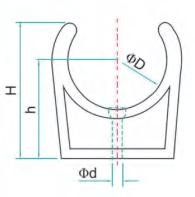
SIZE D H h d
DN15 20.20 35.40 27.20 5.20
DN20 25.10 41.00 30.50 5.20
DN25 32.10 52.80 40.00 5.20
DN32 40.10 59.30 44.00 5.20
DN40 50.10 71.20 52.00 5.20
DN50 63.10 88.50 65.00 5.20
DN65 75.10 91.80 62.50 5.20
DN80 90.10 103.90 69.00 5.20
DN100 110.10 124.50 85.00 5.20

Frequently Asked Questions (FAQs)

Q1: How do I select the appropriate pipe clamp material for my application?
Material selection depends on environmental conditions and pipe compatibility. Stainless steel offers superior corrosion resistance for harsh environments, while galvanized steel provides cost-effective protection for general use. Plastic clamps are ideal for PVC pipes and corrosive environments, but temperature limitations must be considered. Always ensure clamp material is compatible with the pipe material to prevent galvanic corrosion .
Q2: What factors determine the proper pipe clamp size?
To determine correct clamp size, measure the pipe’s outer diameter precisely and refer to manufacturer sizing charts. The clamp should fit snugly without over-constricting the pipe, allowing for proper load distribution. For insulated pipes, account for insulation thickness when selecting clamp size. Professional guidelines typically recommend clamps that match the pipe diameter within specified tolerances .
Q3: How often should pipe clamps be inspected and maintained?
Regular inspections should occur annually or according to environmental severity. High-vibration or corrosive environments may require quarterly checks. Maintenance should include verifying tightness, checking for corrosion or wear, and ensuring mounting integrity. Immediate replacement is necessary when signs of deterioration or reduced clamping force are observed .
Q4: Can pipe clamps accommodate thermal expansion in piping systems?
Yes, specific clamp designs like swivel clamps and models with slotted holes allow controlled movement to accommodate thermal expansion. For systems with significant temperature variations, clamps with flexible characteristics or adjustable features should be selected to prevent stress accumulation. The correct placement of guided and fixed points is essential for proper thermal management .
Q5: What are the differences between single-bolt and double-bolt pipe clamps?
Single-bolt clamps offer streamlined installation for low to moderate pressure applications, while double-bolt clamps provide superior grip and pressure distribution for high-pressure or high-vibration environments. The dual-bolt design creates more even clamping force around the pipe circumference, making them suitable for industrial applications where reliability is critical .


daiwang@skrpipe.com
+86 153-703-27218
Whatsapp