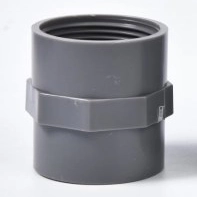
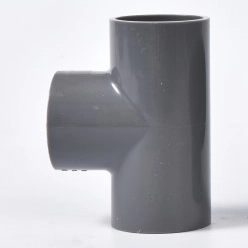
Positive Tee Pipe

Send Inquiry

Overview of Positive Tee Pipe

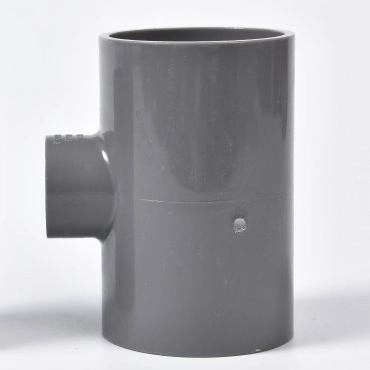
Sikerui Positive Tee Pipe​ is a precision-engineered pipe fitting designed with a T-shaped configuration​ to create 90-degree branch connections in piping systems, facilitating efficient flow distribution in multiple directions . Manufactured from high-performance materials including steel-plastic composites, PVC, and polyethylene, this fitting features a unique design where all three outlets are aligned in the same plane, ensuring optimal fluid dynamics and minimal pressure drop . Unlike reducing tees, the positive tee maintains consistent dimensions across all openings, providing symmetrical flow characteristics ideal for balanced distribution systems .
Engineered to meet international standards such as ISO 4422 and DIN 80707, Positive Tee Pipes operate effectively in temperatures ranging from -20°C to 110°C and withstand pressures up to 1.6 MPa (PN16) . Their robust construction and corrosion-resistant properties make them suitable for demanding applications in water supply, chemical processing, irrigation, and industrial plumbing . With a service life exceeding 50 years, these fittings offer a reliable, maintenance-free solution for complex piping networks where directional changes and flow divisions are critical .

Key Features of Positive Tee Pipe

1. Superior Flow Distribution

The symmetrical design of Positive Tee Pipes ensures balanced flow distribution​ between branch lines, minimizing turbulence and pressure loss . The smooth interior surface reduces friction resistance, preventing sediment accumulation and maintaining efficiency in water and chemical transport systems . This optimized hydraulic performance is particularly valuable in irrigation and municipal water distribution networks where consistent pressure is essential .

2. Robust Composite Construction

Positive Tee Pipes utilize steel-plastic composite technology, combining a galvanized steel core with inner and outer layers of polyethylene or polypropylene . This structure provides the strength of metal with the corrosion resistance of plastics, resulting in a fitting that withstands harsh chemicals, soil stresses, and environmental factors while maintaining structural integrity . The composite design also reduces weight by up to 30% compared to traditional metal fittings, simplifying handling and installation .

3. Electrofusion Compatibility

Many Positive Tee Pipes are designed for electrofusion connection systems, enabling seamless, leak-proof joints with parent pipes through controlled heating elements integrated into the fitting . This creates monolithic connections that exceed pipe strength, ensuring long-term reliability in pressurized applications . The electrofusion process reduces installation time by up to 50% compared to mechanical joining methods, while allowing for visual inspection of proper joint formation .

4. Chemical and UV Resistance

The polyethylene or polypropylene layers provide exceptional resistance​ to acids, alkalis, and ultraviolet radiation, making Positive Tee Pipes suitable for both underground and exposed installations . This chemical inertness prevents scaling and degradation, maintaining water quality in potable systems and ensuring longevity in agricultural and industrial applications where fertilizers or chemicals are present .

5. Versatile Sizing and Configuration

Available in sizes from DN20 to DN630, Positive Tee Pipes accommodate various system requirements, with customization options for specific project needs . The consistent diameter across all three connections simplifies system design and inventory management, while standardized dimensions ensure compatibility with existing piping infrastructures .

Typical Applications of Positive Tee Pipe

Water Distribution Systems

Positive Tee Pipes are extensively used in municipal water networks​ to create branch connections for residential and commercial supply lines . Their corrosion resistance and smooth interior prevent scaling and maintain water quality, while the robust construction withstands soil pressures and loading conditions in buried applications . The symmetrical design ensures balanced pressure distribution across branch lines, optimizing system performance .

Industrial Chemical Processing

In chemical plants and manufacturing facilities, Positive Tee Pipes handle corrosive fluids and aggressive media​ without degradation . The chemical-resistant materials maintain integrity when transporting acids, alkalis, and solvents, providing reliable performance in demanding industrial environments where metal fittings would corrode . Their electrofusion capability creates leak-proof joints essential for hazardous material containment .

Agricultural Irrigation Systems

The UV-resistant properties​ of Positive Tee Pipes make them ideal for outdoor irrigation systems, where they facilitate flow distribution to multiple zones from main supply lines . Their durability withstands exposure to fertilizers and pesticides, while the smooth interior prevents clogging from sediment or mineral deposits common in agricultural water sources .

Mining and Dewatering Operations

In mining applications, Positive Tee Pipes provide reliable connections for dewatering and slurry transport systems, resisting abrasion from suspended solids and chemical corrosion from mine water . Their robust construction handles the dynamic pressures and demanding conditions of mining operations, outperforming traditional materials in longevity and reliability .

Gas Distribution Networks

Specialized Positive Tee Pipes with gas-grade certifications​ are used in natural gas distribution systems, providing secure branch connections that maintain integrity under fluctuating pressures . The electrofusion joints create permanent, leak-proof seals essential for gas applications, while the material compatibility ensures long-term safety and performance .

Technical Specifications

Table: Standard Positive Tee Pipe Specifications
Parameter
Specification Range
Standards
Size Range
DN20 to DN630 (½” to 24″)
ISO 4422, DIN 80707
Pressure Rating
PN10 to PN16 (1.0-1.6 MPa)
Application-dependent
Temperature Range
-20°C to 110°C
Material-specific
Materials
Steel-Plastic Composite, HDPE, PP-R, PVC
Various certifications
Connection Types
Electrofusion, Socket Fusion, Threaded
Industry standards
Standards Compliance
ISO 9001, ISO 4422, DIN 80707
International certifications


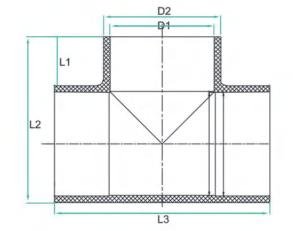
SIZE NO. D1 D2 L1 L2 L3
DN15 ST15 20.3 26.3 16.5 41.12 56
DN20 ST20 25.3 31.9 19 48.93 66
DN25 ST25 32.35 39.95 22.5 59.96 80
DN32 ST32 40.4 49.8 26.5 72.73 96
DN40 ST40 50.45 60.25 31.5 88.27 116
DN50 ST50 63.5 75.9 38 109.09 142
DN65 ST65 75.5 88.91 44 127.47 166
DN80 ST80 90.55 105.15 51.5 150.12 196
DN100 ST100 110.6 127.39 61.5 181.92 236
DN125 ST125 140.6 161.4 76 228.82 295.5
DN150 ST150 160.7 184.5 86.5 260.8 335
DN200 ST200 200 228.1 106.2 322.05 416
DN250 ST250 226.2 253.8 118.5 361 466.5
DN250 ST250 250 283.4 131.5 400.2 517
DN250 ST250 281.5 315.5 147 446 580
DN300 ST300 316.7 355 165 504 654
DN350 ST350 356.8 395 185 566 738
DN400 ST400 402 442 208 634 828
DN250(PN10) ST250 280.6 306 147 448 552
DN300(PN10) ST300 315.7 344 165 502 453
DN350(PN10) ST350 355.8 385 183.5 564 736.5
DN400(PN10) ST400 401 432 208 634 826

Frequently Asked Questions (FAQs)

Q1: What distinguishes a Positive Tee Pipe from a standard tee fitting?
A Positive Tee Pipe features symmetrical dimensions across all three openings, ensuring consistent flow characteristics, whereas standard tees may have reducing branches . This design provides balanced distribution without the flow restrictions common in reducing configurations, making it ideal for applications requiring equal flow division .
Q2: Can Positive Tee Pipes be used for potable water applications?
Yes, Positive Tee Pipes manufactured from certified materials​ comply with drinking water standards such as NSF/ANSI 61, ensuring safe transport of potable water . The non-toxic, inert materials prevent taste or color transfer, maintaining water quality throughout the system’s service life .
Q3: What installation methods are recommended for Positive Tee Pipes?
Electrofusion is the preferred method​ for permanent, leak-proof joints, though socket fusion and threaded connections are also available . Electrofusion ensures homogeneous integration with the pipe, creating a connection stronger than the pipe itself . Proper installation requires clean, prepared surfaces and controlled heating cycles according to manufacturer specifications .
Q4: How does the steel-plastic composite construction enhance performance?
The composite design combines the strength of steel​ with the corrosion resistance of plastics, creating a fitting that withstands both internal pressure and external stresses while resisting chemical degradation . The steel core provides dimensional stability and pressure resistance, while the plastic layers protect against corrosion and abrasion, resulting in a fitting that outperforms single-material alternatives .
Q5: What is the typical lifespan of Positive Tee Pipes in underground applications?
When properly installed, Positive Tee Pipes typically exceed 50 years of service​ in buried conditions, thanks to their corrosion-resistant materials and robust construction . The composite materials resist soil chemicals, moisture, and environmental stressors that degrade traditional fittings, ensuring long-term reliability with minimal maintenance .
daiwang@skrpipe.com
+86 153-703-27218
Whatsapp