| M.L.S.E.PRC |
Manufacture License of Special Equitment People’s Republic of
China |
| ISO14001:2004 |
Certificate of Environment Management System |
| ISO9001-2008 |
Certificate of Approval Certificate |
| NPQTC |
National Quality Supervision Testing Centre of Plastic Product |
| SGS |
Society General de Surveillance |

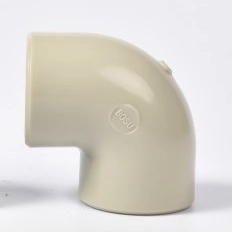
The properties of the products:
1. Light weight: The weight per unit is only 1/6 of the cast-iron pipes, so the transport is quite convenient.
2. High strength: The strength can get to 45mpa
3. Low resistance: The internal surface of the pipe is smooth with no dirt and no blockage. The loss is 30% lower than that of the cast-iron pipes.
4. Corrosion resistance: It has good quality of high acid resistance, alkali resistance, chemicals resistance and electrochemistry resistance, so the point of corrosion will not occur during the use.
5. Easy installation: It adopts the glue and soft joining. Therefore, the installation is quite easy and sealing is reliable.
6. Long service life: The service time can reach more than 50 years under the normal working pressure.
7. Low cost: The cost of transport and installation is low, and the total engineering cost is 30-40% lower than of the cast-iron pipes.
8. Non-toxic and sanitation: The product conforms to the standards of the drink water and water transported has no second pollution.
Frequently Asked Questions (FAQs)
Q1: How does a ball check valve differ from a swing check valve in performance?
Ball check valves offer superior performance in dirty or viscous fluids due to their self-cleaning rotating action, while swing check valves may jam or fail to seal properly in such conditions . The compact design of ball check valves allows for installation in any orientation, unlike swing check valves that typically require specific mounting positions . Additionally, ball check valves generally provide faster response to flow reversal, minimizing water hammer risk in systems with rapid pump shutdowns .
Q2: Can ball check valves handle abrasive slurries and viscous fluids?
Yes, ball check valves are particularly well-suited for abrasive and viscous media due to their self-cleaning design and absence of guiding mechanisms that can clog or bind . The rotating ball action helps prevent particle accumulation, while optional polyurethane or rubber-coated balls provide enhanced wear resistance in slurry applications . For highly abrasive services, specialized materials and hardened coatings are available to extend service life in mining, mineral processing, and industrial slurry systems .
Q3: What maintenance is required for ball check valves?
Ball check valves require minimal routine maintenance due to their simple design with only one moving part . Periodic inspection of the sealing surface and verification of proper operation constitute the primary maintenance requirements, with typical service intervals ranging from 1-3 years depending on application severity . The most common maintenance issue involves cleaning the valve chamber if unusual operating noises indicate potential debris interference with ball movement .
Q4: How do I select the appropriate ball check valve size for my application?
Proper sizing requires matching the valve diameter to the pipeline size while considering flow rate, velocity, and pressure drop requirements . Oversized valves may fail to generate sufficient lift for proper operation, while undersized valves create excessive pressure drop and potential water hammer . Consultation with manufacturer performance curves is recommended to ensure the selected valve size provides optimal performance for specific flow conditions and system parameters .
Q5: Are there special considerations for installing ball check valves?
Installation should ensure adequate straight pipe runs before and after the valve (typically 5-10 pipe diameters) to maintain stable flow profiles for proper operation . While ball check valves function in any orientation, horizontal installation with the ball chamber upright is preferred when possible to optimize performance and accessibility . For systems with significant water hammer potential, consider installing slow-closing accessories or selecting valves with modified ball weights to cushion the closing action .