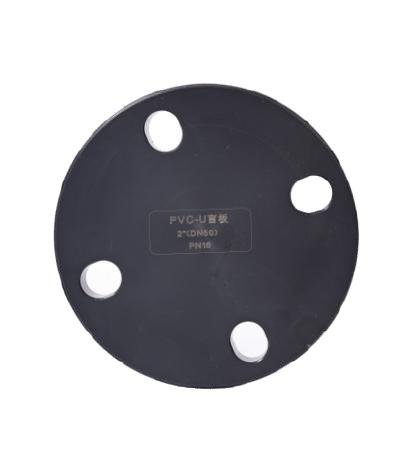
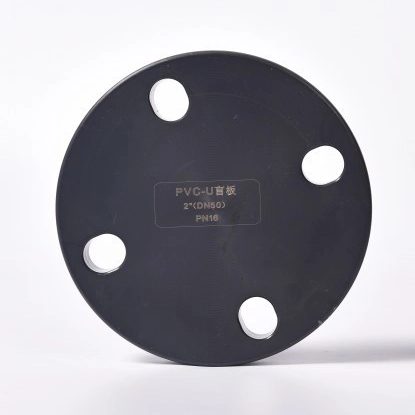
Blind Plate

Standard: DIN, GB

Type: Welding Flange

Material: Plastic-UPVC

Structure: Round

Connection: Flanged

Sealing Surface: FF

Model NO.: blind flange

Manufacturing Way: Injection

Trademark: Sikerui

Specification: DN15-DN300

Origin: China

Pressure rating: PN10

Send Inquiry

Product Overview of UPVC Blind Flange

UPVC Blind Flange, also known as flange cover​ or pipe plug, is a high-performance piping component engineered from unplasticized polyvinyl chloride (UPVC) specifically designed for isolating, sealing, and terminating pipelines in industrial systems . This solid, disc-shaped flange without a center hole serves as a reliable, removable sealing solution across various applications including chemical processing, water treatment, industrial plumbing, and corrosive fluid handling systems . Unlike permanent seals like heads or caps, the UPVC blind flange offers the distinct advantage of being easily installed and removed as needed, providing flexible isolation capabilities while maintaining exceptional corrosion resistance and durability .
Manufactured to meet international standards including both national (GB) and American (ANSI) specifications, UPVC blind flanges are available in a comprehensive size range from DN15 to DN600 (1/2″ to 10″) to accommodate diverse piping requirements . With pressure ratings typically spanning 1.0MPa (10kg) to 1.6MPa (16kg), these components are engineered to deliver long-term performance in demanding environments while being significantly lighter than equivalent metal flanges .

Key Features of UPVC Blind Flange

Exceptional Corrosion Resistance

UPVC blind flanges demonstrate superior resistance​ to acids, alkalis, and chemical corrosion, making them ideal for chemical processing, wastewater treatment, and industrial applications involving aggressive media . The non-metallic composition eliminates galvanic corrosion concerns and ensures long-term integrity even when handling corrosive substances that would rapidly degrade metal flanges .

Lightweight Construction with Robust Mechanical Strength

Weighing approximately one-fifth of equivalent steel flanges, UPVC blind flanges significantly reduce installation effort and transportation costs while maintaining impressive mechanical strength . Despite their lightweight nature, these flanges offer substantial pressure endurance​ with working pressures typically rated at 1.6MPa, suitable for most industrial applications .

Reliable Sealing Performance

Featuring multiple sealing surface options​ including plane, convex, concave and convex surfaces, tongue and groove surfaces, and ring connection surfaces, UPVC blind flanges ensure leak-proof isolation . The bolted connection system provides a secure yet removable seal​ that can be repeatedly engaged and disengaged as operational requirements change .

Thermal and Electrical Properties

UPVC blind flanges maintain performance across a temperature range of 0°C to 75°C, with some formulations extending to 90°C for specific materials like CPVC . Additionally, UPVC’s natural electrical insulation properties​ prevent galvanic corrosion and make these flanges suitable for electrical isolation applications .

Smooth Surface and Hygienic Properties

The non-porous, smooth surface​ of UPVC blind flanges prevents scaling, accumulation of deposits, and bacterial growth, ensuring maintained hygiene and flow characteristics over time . This makes them suitable for potable water applications​ and industries with strict sanitary requirements such as food processing and pharmaceutical manufacturing .

Applications of UPVC Blind Flange

Isolation for Maintenance and Safety

UPVC blind flanges provide reliable isolation​ during equipment maintenance, inspection, or system modifications, ensuring complete separation of pipeline sections . They serve as a critical safety measure​ by positively isolating sections of pipeline where accidental flow could create hazardous conditions during maintenance activities .

Chemical and Industrial Processing

In chemical plants, manufacturing facilities, and industrial complexes, UPVC blind flanges offer corrosion-resistant isolation​ for aggressive chemical media including acids, alkalis, and solvents . Their compatibility with diverse chemical environments makes them suitable for pharmaceutical production, electroplating operations, semiconductor manufacturing, and petrochemical processing .

Water and Wastewater Treatment

UPVC blind flanges are extensively used in water treatment plants, desalination facilities, and sewage systems where corrosion resistance and long service life are essential . Applications include isolation of filtration systems, chemical dosing lines, and reactor tanks in both municipal and industrial water treatment facilities .

Multi-System Pipeline Configurations

In complex industrial plants with multiple parallel systems, UPVC blind flanges enable isolation of individual production trains while maintaining operation in adjacent lines . This allows for staged commissioning​ of new facilities and efficient maintenance​ scheduling without complete plant shutdowns .

Specialized Configurations: Figure-8 Blind Flanges

The distinctive figure-8 blind flange​ (spectacle blind) provides visual indication of isolation status with a blind plate on one end and a throttle ring on the other . This design allows quick changeover between operational and isolation states while providing clear visual confirmation​ of the system status .

Technical Specifications

Table: Standard UPVC Blind Flange Specifications
Parameter
Specification
Standards
Size Range
DN15 to DN600 (1/2″ to 10″)
International standards
Pressure Rating
1.0MPa (10kg) to 1.6MPa (16kg)
Standard industrial pressure classes
Temperature Range
0°C to 75°C (UPVC); up to 90°C for CPVC/PP variants
Material-dependent specifications
Material
UPVC, with options for CPVC, PPH, PVDF, and reinforced plastics
Industry-standard materials
Connection Type
Flange connection (bolt-fastened)
Standard flange practice
Manufacturing Standard
National (GB), American (ANSI), and other international standards
Compliance with multiple standards

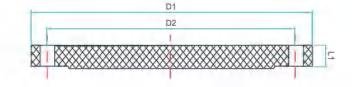
SIZE Number D1 D2 L1 r-φe
DN15 MBL15 95 65 12 4-φ18
DN20 MBL20 105 75 13.4 4-φ18
DN25 MBL25 115 85 15 4-φ18
DN32 MBL32 140 100 16 4-φ18
DN40 MBL40 150 110 17.5 4-φ18
DN50 MBL50 165 125 19 4-φ18
DN65 MBL65 185 145 22.3 4-φ18
DN80 MBL80 200 160 22.8 8-φ18
DN100 MBL100 220 180 25 8-φ18
DN125 MBL125 250 210 32 8-φ18
DN150 MBL150 285 240 33 8-φ22
DN200 MBL200 340 295 34 8-φ22

Frequently Asked Questions (FAQs)

Q1: What are the key advantages of UPVC blind flanges compared to metal alternatives?
UPVC blind flanges offer superior corrosion resistance, significantly lighter weight​ (approximately 1/5 the weight of steel), cost-effectiveness, and electrical insulation properties​ that make them ideal for corrosive environments and applications where galvanic corrosion is a concern .
Q2: Can UPVC blind flanges be customized for specific application requirements?
Yes, UPVC blind flanges can be customized in terms of dimensions​ (from DN15 to DN600), pressure ratings, and specific material formulations​ to meet unique application requirements, including specialized sealing surfaces and connection configurations .
Q3: What is the typical service life of UPVC blind flanges?
UPVC blind flanges offer an exceptional service life​ exceeding 40-50 years in appropriate applications, thanks to their corrosion resistance, UV stability (when properly formulated), and maintenance-free operation .
Q4: How do UPVC blind flanges compare to other isolation methods like valves?
Unlike valves that may leak through the seat over time, UPVC blind flanges provide absolute, positive isolation​ when properly installed . They are considered the most reliable method for complete system isolation, particularly for maintenance safety or long-term system segregation .
Q5: What standards govern the manufacture of UPVC blind flanges?
UPVC blind flanges are produced according to various international standards including GB (Chinese National Standard), ANSI/ASME (American), and other region-specific standards, ensuring compatibility with global piping system requirements .
daiwang@skrpipe.com
+86 153-703-27218
Whatsapp