Cross Pipe

Send Inquiry

Overview of Cross Pipe

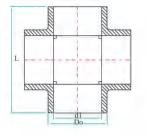
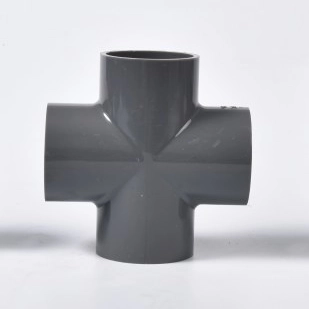
A Cross Pipe​ (also known as a four-way fitting​ or cross branch line) is a precision-engineered pipe fitting designed to connect four separate pipes at a single junction point, facilitating multi-directional flow distribution within piping systems . This specialized component features one primary inlet and three outlet branches (or vice versa), creating intersections that allow for complex fluid or gas routing in industrial, commercial, and residential applications . Manufactured from various materials including stainless steel, PVC, CPVC, brass, and malleable iron, cross pipes are available in threaded, socket-weld, solvent-weld, and compression connection styles to meet diverse system requirements .
Engineered to comply with international standards such as ISO, DIN, ANSI, and ASME, cross pipes maintain structural integrity under pressure ratings up to 3000 PSI and temperature ranges from -20°C to 150°C, depending on material specifications . Unlike tees that create simpler three-way connections, cross pipes enable more complex distribution networks but require careful consideration of thermal stress management due to their four connection points . With applications spanning plumbing, HVAC, fire protection, chemical processing, and irrigation systems, cross pipes provide essential flow distribution capabilities where multiple directional splits are required in a compact fitting .

Key Features of Cross Pipe

Multi-Directional Flow Distribution

Cross pipes are uniquely designed to manage complex flow patterns​ within piping systems, allowing a single source to supply three separate lines or combining three inputs into one discharge . This four-way configuration enables efficient distribution without requiring multiple separate fittings, reducing potential leak points and simplifying system design for applications requiring balanced flow division . The internal geometry is optimized to minimize turbulence and pressure drop across all branches, maintaining efficient system performance .

Robust Construction and Material Versatility

Constructed from durable materials​ including stainless steel (304/316), PVC, CPVC, brass, and malleable iron, cross pipes are engineered to withstand specific operating conditions including corrosive environments, high pressure, and temperature extremes . Stainless steel versions offer exceptional corrosion resistance for chemical applications, while PVC fittings provide cost-effective solutions for water distribution and irrigation systems . Each material option is selected based on compatibility with conveyed media, pressure requirements, and environmental factors to ensure long-term reliability .

Comprehensive Connection Options

Cross pipes are available with multiple connection methods​ including threaded (NPT, BSPT, BSPP), socket weld, solvent weld, and compression-style endings to match various piping system requirements . This versatility ensures compatibility with existing infrastructure while allowing selection based on installation preferences, pressure requirements, and maintenance needs. Threaded connections facilitate easy disassembly for maintenance, while welded and solvent-cement joints provide permanent, leak-proof seals for high-pressure applications .

Thermal Stress Management

Unlike simpler fittings, cross pipes require careful stress consideration​ due to their four connection points, which can create unique challenges with thermal expansion and contraction . High-quality cross pipes are engineered with reinforced designs and appropriate material selection to distribute these stresses effectively, preventing premature failure in systems experiencing temperature fluctuations . Proper installation with adequate supports is essential to maximize service life and maintain system integrity .

Pressure-Rated Performance

Cross pipes are manufactured to withstand significant operating pressures​ ranging from 150 PSI to 3000 PSI depending on material, size, and design specifications . Pressure ratings are validated through rigorous testing procedures complying with international standards, ensuring reliable performance under documented operating conditions. This makes them suitable for everything from low-pressure residential plumbing to high-pressure industrial hydraulic and process applications .

Typical Applications of Cross Pipe

Industrial Process Piping

In chemical plants, manufacturing facilities, and refineries, cross pipes facilitate complex flow distribution​ where multiple process lines intersect . They enable precise routing of chemicals, solvents, and process fluids to various equipment points while maintaining system pressure and flow characteristics. Stainless steel and corrosion-resistant alloy versions are particularly valuable in these demanding environments where chemical compatibility and pressure integrity are critical to operational safety and efficiency .

Fire Protection Systems

Cross pipes serve critical functions in sprinkler and deluge systems​ where water distribution to multiple branches is required from a single supply line . Their robust construction ensures reliable performance during emergency operations, with materials selected to withstand stagnant water conditions while maintaining readiness for immediate activation. The predictable flow characteristics ensure balanced distribution to all system branches when the system is activated .

Plumbing and HVAC Systems

In commercial and residential buildings, cross pipes enable efficient water distribution​ to multiple fixtures from single supply lines, reducing installation complexity and material requirements . HVAC applications utilize cross fittings in hydronic heating and cooling systems where water must be distributed to various zones or heat exchangers. The smooth interior surfaces minimize flow resistance, maintaining energy efficiency while providing the required flow division for optimal system performance .

Irrigation and Agricultural Systems

Agricultural applications employ cross pipes in complex irrigation networks​ where water distribution to multiple zones occurs from primary supply lines . PVC and PP-R versions are particularly suitable for these applications due to their corrosion resistance, cost-effectiveness, and durability in outdoor environments. The ability to create multiple distribution points from a single source simplifies system design and reduces installation costs for large-scale agricultural irrigation projects .

Technical Specifications

Table: Standard Cross Pipe Specifications
Parameter
Specification Range
Standards
Size Range
1/8″ to 4″ (DN6 to DN100)
ASME, ISO, DIN
Pressure Rating
150 PSI to 3000 PSI
Application-dependent
Temperature Range
-20°C to 150°C
Material-specific
Material Options
Stainless Steel, PVC, CPVC, Brass, Malleable Iron
Various certifications
Connection Types
Threaded, Socket Weld, Solvent Weld, Compression
NPT, BSPT, BSPP
Standards Compliance
ISO, ASME, DIN, ANSI
Industry standards

SIZE D0 d1 L
DN15 26.30 20.30 55.40
DN20 31.90 25.30 65.40
DN25 39.95 32.35 79.40
DN32 49.80 40.40 95.40
DN40 60.25 50.45 115.40
DN50 75.90 63.50 141.40
DN65 88.91 75.50 165.00
DN80 105.15 90.55 195.00
DN100 127.39 110.60 235.00
DN125 161.40 140.60 296.00
DN150 184.50 160.70 336.00
DN200 253.80 226.20 465.00

Frequently Asked Questions (FAQs)

Q1: What is the primary difference between a cross pipe and a tee fitting?
A cross pipe features four connection points​ (one inlet, three outlets or vice versa), while a tee has only three (one inlet, two outlets) . This makes crosses suitable for more complex distribution applications but also requires greater attention to thermal stress management, as the four connection points can create different expansion patterns than the more stable three-point configuration of a tee .
Q2: Can cross pipes be used in high-temperature applications?
Yes, specific materials including stainless steel and certain alloys​ can withstand elevated temperatures up to 150°C, with specialized versions rated for even higher temperature service . The appropriate material selection depends on the continuous operating temperature, peak temperature requirements, and the nature of the conveyed media. Always consult manufacturer specifications for temperature-pressure ratings for your specific application .
Q3: What are the available size ranges for cross pipes?
Cross pipes are typically available in sizes ranging from 1/8 inch to 4 inches (DN6 to DN100), with some manufacturers offering larger diameters for specialized applications . The available size range varies by material type and manufacturer capabilities, with more common sizes generally available from stock while larger or unusual sizes may require custom manufacturing with extended lead times .
Q4: How does the installation of cross pipes differ from other fittings?
Cross pipe installation requires careful attention to alignment and support​ due to the four connection points creating more complex stress patterns . Proper alignment of all connected pipes is essential to prevent binding stresses that could lead to premature failure. Additional supports near the fitting are often recommended, particularly in systems subject to temperature variations that cause expansion and contraction movements .
Q5: What is the lead time for custom cross pipe orders?
Standard cross pipes are typically available with lead times of 2-4 weeks, while custom configurations may require 4-8 weeks depending on complexity and manufacturer capacity . Factors affecting lead time include material availability, certification requirements, special testing, and quantity. Many suppliers maintain stock of common sizes and materials for quicker delivery, with express options available for urgent requirements .
daiwang@skrpipe.com
+86 153-703-27218
Whatsapp