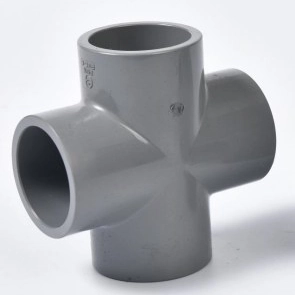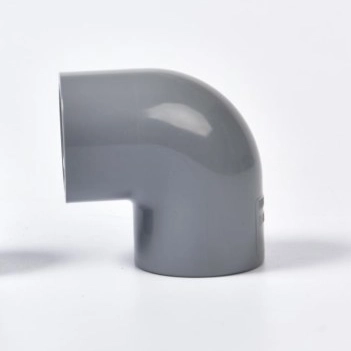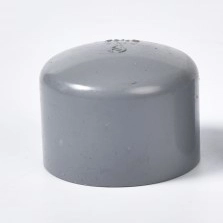
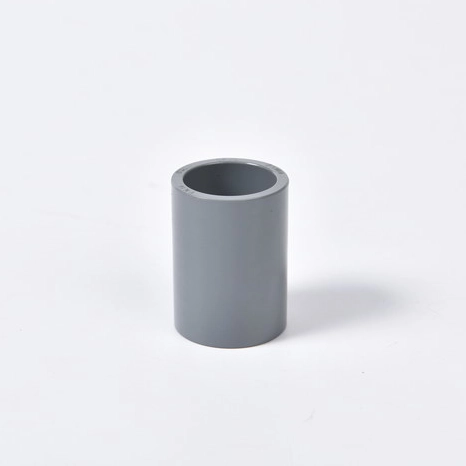
Direct Coupling

Send Inquiry

Overview of CPVC Direct Coupling

A CPVC Direct Coupling​ is a precision-engineered pipe fitting manufactured from chlorinated polyvinyl chloride (CPVC), designed to create seamless inline connections between two pipes of identical diameters in industrial piping systems. This critical component ensures continuous flow in applications requiring superior chemical resistance, thermal stability, and long-term durability. Through a chlorination process that increases chlorine content from 56.7% to 63-69%, CPVC achieves enhanced molecular irregularity and polarity, significantly improving its heat distortion temperature and chemical stability compared to standard PVC materials .
Engineered to meet international standards including ASTM, ISO, and DIN specifications, CPVC direct couplings excel in demanding environments where temperatures range from -20°C to 110°C, with pressure ratings spanning PN10 to PN16 (1.0-1.6 MPa) . The material’s unique properties—including a Vicat softening temperature of 90-125°C—make it ideal for chemical processing, hot water distribution, industrial plumbing, and electrical conduit systems where traditional PVC would deform or degrade . With a service life exceeding 50 years, CPVC direct couplings provide a cost-effective, maintenance-free solution for corrosive fluid transport while maintaining structural integrity under continuous thermal and pressure stress .
The coupling’s design features a smooth interior surface that minimizes flow resistance and prevents sediment accumulation, while its solvent-cement or threaded connection options facilitate quick, secure installations. Available in sizes from DN15 to DN400 (½” to 16″), these couplings offer exceptional value in applications ranging from chemical plants to potable water systems, outperforming metal alternatives through immunity to corrosion, electrolysis, and scaling .

Key Features of CPVC Direct Coupling

Enhanced Thermal Stability

CPVC direct couplings maintain structural integrity at elevated temperatures​ up to 110°C, significantly outperforming standard PVC fittings which typically withstand only 60°C. This thermal resilience stems from the material’s chlorination process, which increases the glass transition temperature and Vicat softening point to 90-125°C, enabling reliable performance in hot water and industrial process applications where thermal degradation would compromise ordinary plastics . The material’s low thermal conductivity (approximately 1/300th that of steel) provides inherent insulation, reducing energy loss in heated fluid transport systems while eliminating the need for additional insulation in many applications .

Superior Chemical Resistance

The increased chlorine content in CPVC (63-69% compared to PVC’s 56%) creates a molecular structure highly resistant to chemical attack, making these couplings ideal for handling acids, alkalis, salts, and oxidizing agents across a pH range of 1-14. This chemical inertness prevents corrosion, scaling, and degradation that would compromise metal or less-resistant plastic fittings, ensuring long-term reliability in aggressive chemical environments . The non-conductive nature of CPVC also eliminates galvanic corrosion and electrolysis concerns, providing additional protection in conductive chemical services or moist environments where metallic couplings would fail prematurely .

Mechanical Strength and Durability

CPVC direct couplings exhibit exceptional mechanical properties​ with tensile strength reaching 54-70 MPa and flexural strength up to 120 MPa, outperforming standard PVC by approximately 30-40%. This enhanced strength enables thinner wall designs while maintaining pressure ratings, optimizing flow characteristics and material usage . The material’s impact resistance and structural memory allow it to withstand pressure surges, water hammer, and external loading without permanent deformation, maintaining seal integrity under dynamic operating conditions that would cause brittle failure in more rigid materials .

Installation Efficiency and Weight Advantage

Weighing approximately one-eighth of equivalent steel couplings​ and half that of metallic alternatives, CPVC direct couplings significantly reduce handling effort, support requirements, and installation time. The lightweight nature permits manual installation without heavy equipment, while solvent cement joining creates permanent, leak-proof bonds in minutes compared to hours required for welding or threading metal alternatives . This installation efficiency translates to substantial labor savings, particularly in retrofit applications or confined spaces where maneuverability is limited .

Long-Term Value and Sustainability

With a service life exceeding 50 years​ in appropriate applications, CPVC direct couplings outlast many metallic alternatives while requiring minimal maintenance. The material’s corrosion immunity eliminates replacement cycles associated with corroded steel or degraded stainless steel fittings, providing life-cycle cost savings of 30-50% over metallic systems in aggressive environments . As a thermoplastic, CPVC is fully recyclable, and its smooth bore maintains hydraulic efficiency over decades without the flow reduction associated with scaling or corrosion buildup in metal pipes, delivering sustained energy savings throughout its service life .

Typical Applications of CPVC Direct Coupling

Industrial Chemical Processing

In chemical plants, manufacturing facilities, and laboratories, CPVC direct couplings provide reliable connections for aggressive chemical transport, handling acids, caustics, solvents, and process fluids that would rapidly degrade metallic or less-resistant plastic systems. The material’s immunity to a wide pH range and resistance to chemical permeation make it ideal for pharmaceutical production, semiconductor manufacturing, and industrial chemical processing where purity and reliability are critical. These couplings maintain seal integrity even with thermal cycling between chemical exposure and cleaning cycles, outperforming metals that would suffer stress corrosion cracking or pitting in similar service conditions .

Hot Water Distribution Systems

CPVC direct couplings are extensively used in recirculating hot water systems​ for commercial buildings, hospitals, and industrial facilities where temperatures exceed PVC’s capabilities. The material’s thermal stability prevents deformation or stress cracking in continuous 80-90°C service, while its low thermal conductivity minimizes heat loss compared to metallic alternatives. For potable water applications, CPVC complies with NSF/ANSI 61 certification, ensuring no leaching of harmful compounds into water supplies, making it suitable for domestic hot water distribution where water quality and safety are paramount concerns .

Fire Sprinkler Systems

The inherent flame resistance​ of CPVC (rated V-0 per UL 94) makes these couplings suitable for light hazard fire sprinkler applications where traditional metallic systems face corrosion-induced reliability issues. CPVC’s chlorine content provides natural flame retardancy, with limiting oxygen index (LOI) values exceeding 60%, causing sprinkler pipes to self-extinguish when flame sources are removed. The smooth interior surface maintains hydraulic efficiency over decades without the scale accumulation that can reduce water delivery in corroded steel systems, ensuring consistent performance in emergency conditions .

Electrical Conduit and Corrosive Fume Handling

The non-conductive properties​ of CPVC make these couplings ideal for electrical conduit systems, providing cable protection while eliminating grounding concerns associated with metallic raceways. In chemical exhaust and fume handling applications, CPVC resists acidic condensation and chemical attack that would degrade metal duct systems, maintaining structural integrity in laboratory exhaust, chemical scrubbing, and industrial ventilation applications. The material’s light weight simplifies overhead installations, while its corrosion immunity eliminates the maintenance cycles associated with deteriorating metallic ventilation components .

Technical Specifications

Table: Standard CPVC Direct Coupling Specifications
Parameter
Specification Range
Standards/Notes
Size Range
DN15 to DN400 (½” to 16″)
ASTM D2846, ISO 15493
Pressure Rating
PN10 to PN16 (1.0-1.6 MPa)
Temperature dependent
Temperature Range
-20°C to 110°C (continuous)
Peak temperature 110°C
Material Standards
ASTM F441, ISO 15493
CPVC Class 23447
Connection Types
Solvent cement, threaded
Based on application
Hydrostatic Design Basis
1,500 psi at 73°F (23°C)
ASTM D2837
Thermal Expansion Coefficient
3.0 × 10⁻⁵ in/in/°F
1/3 that of PVC

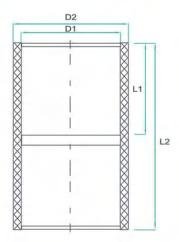
SIZE Number D1 D2 L1 L2
DN15 ZJ15 20.3 26.3 16.5 34.4
DN20 ZJ20 25.3 31.9 19 39
DN25 ZJ25 32.35 39.95 22.5 46.27
DN32 ZJ32 40.4 49.8 26.5 54.38
DN40 ZJ40 50.45 60.25 31.5 64.39
DN50 ZJ50 63.5 75.9 38 85.11
DN65 ZJ65 75.5 88.91 44 90.16
DN80 ZJ80 90.55 105.15 51.5 106.32
DN100 ZJ100 110.6 127.39 61.5 138.49
DN125 ZJ125 140.6 161.4 76 159.61
DN150 ZJ150 160.7 184.5 86.5 179.35
dn200 ZJ200 200 228.1 106.2 218
DN200 ZJ200 226.2 253.8 118.5 243.03
dn250 ZJ250 250 281.89 131.5 268
DN250 ZJ250 281.5 315.5 147 299
DN300 ZJ300 316.7 355 165 343
DN350 ZJ350 356.8 395 185 376
DN400 ZJ400 402 442 208 424
DN250 (PN10) ZJ250 280.6 306 147 299
DN300 (PN10) ZJ300 315.7 344 166 343
DN350 (PN10) ZJ350 355.8 385 183.5 373
DN400 (PN10) ZJ400 401 432 208 423

Frequently Asked Questions (FAQs)

Q1: How does CPVC compare to standard PVC in high-temperature applications?
CPVC maintains significantly higher temperature resistance​ than PVC, with continuous service up to 110°C compared to PVC’s 60°C limit. This enhanced thermal capability stems from CPVC’s chlorination process, which increases chlorine content from 56% to 63-69%, raising the glass transition temperature and Vicat softening point by approximately 30-40°C. This makes CPVC direct couplings suitable for hot water, industrial process, and chemical applications where standard PVC would soften, deform, or fail structurally .
Q2: What installation methods are recommended for CPVC direct couplings?
CPVC direct couplings typically employ solvent cement joining​ for permanent, leak-proof connections, with threaded options available for applications requiring disassembly. Solvent cement installation involves applying primer to prepare surfaces, followed by CPVC-specific cement that chemically fuses the coupling and pipe into a monolithic joint stronger than the pipe itself. Proper installation requires clean, deburred pipe ends; full cement coverage; and quarter-turn rotation during assembly to ensure uniform cement distribution. The joint achieves full strength within 24 hours, depending on pipe size, temperature, and humidity conditions .
Q3: Can CPVC direct couplings handle thermal expansion and contraction?
Yes, CPVC’s thermal expansion coefficient of 3.0 × 10⁻⁵ in/in/°F​ requires accommodation in long straight runs, typically through expansion loops, offsets, or guided runs. For above-ground installations, supports should allow longitudinal movement while preventing sagging, with spacing based on temperature differential and pipe size. The material’s flexibility accommodates gradual thermal movement without joint stress, but installations experiencing significant temperature swings (>30°C) should incorporate expansion provisions to prevent stress accumulation at connection points .
Q4: Are CPVC direct couplings suitable for underground installation?
CPVC direct couplings are excellent for buried applications​ when properly installed with appropriate bedding and backfill. The material resists soil chemicals, moisture, and microbial attack, maintaining performance indefinitely when buried. For direct burial, installations should use uniform bedding material without sharp rocks, with placement below frost line in freezing climates. Underground runs should avoid point loads that could cause localized stress, with thrust blocks provided at direction changes in pressure systems to prevent joint separation .
Q5: What certifications and standards apply to CPVC direct couplings?
Quality CPVC direct couplings comply with international standards​ including ASTM D2846 (physical dimensions), ASTM F441 (pressure ratings), NSF/ANSI 61 (potable water), and ISO 15493 (industrial applications). Manufacturers typically provide third-party certification from organizations like NSF, UL, or FM Approvals, validating performance claims for specific applications. These certifications ensure the products meet rigorous safety, health, and performance requirements for their intended services, with documentation available for regulatory compliance and quality assurance purposes .
daiwang@skrpipe.com
+86 153-703-27218
Whatsapp