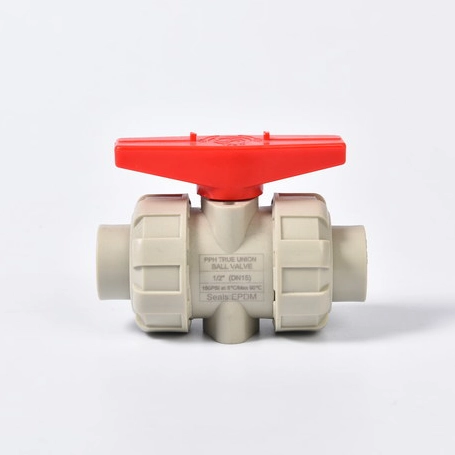
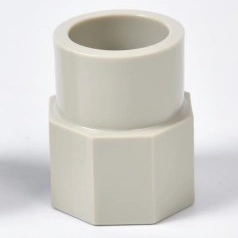
Female Connector

Send Inquiry

Overview of Female Connector

Sikerui Female Connector, also referred to as a socket or receptacle, is a fundamental component designed to mate with a corresponding male connector to establish a secure electrical or mechanical link between devices . Engineered to receive the pins, plugs, or blades of a male connector, it ensures reliable signal transmission, data transfer, and power supply across a vast array of applications, from consumer electronics and industrial automation to automotive systems and communication infrastructure . These connectors are manufactured in various forms, sizes, and specifications—including different pin arrangements, current ratings, and locking mechanisms—to meet specific industry requirements and ensure compatibility . With a design focused on secure mating, durability, and consistent performance, female connectors provide a critical interface point that powers modern electronic and electrical systems .
Their construction often involves high-quality materials such as copper alloys for contacts (with gold or tin plating) and robust insulating materials like high-temperature thermoplastics (e.g., PA rated UL 94 V-0) to ensure excellent conductivity, corrosion resistance, and long-term reliability in diverse operating environments . Standardized by international certifications (e.g., UL, EN 61984), female connectors guarantee safety and interoperability, making them indispensable in both simple and complex interconnection solutions .

Key Features of Female Connector

1. Secure and Compatible Connection

Female connectors are precision-engineered to create a secure and reliable link with male counterparts. Many feature keyed or polarized designs​ that prevent incorrect insertion, protecting the connector pins from damage and ensuring proper alignment for optimal performance . Locking mechanisms​ in some variants further prevent accidental disconnection due to shock or vibration, which is crucial in industrial and automotive settings .

2. Robust Construction and Durability

Constructed from high-grade materials, female connectors offer exceptional mechanical and electrical longevity. The contacts are typically made from phosphor bronze, beryllium copper, or brass, often plated with gold or tin to enhance conductivity and resist corrosion . The insulator body, commonly made from materials like nylon, polyamide (PA), or LCP, provides high-temperature resistance (with operating ranges from -55°C to 130°C or higher) and meets flammability standards such as UL 94 V-0 .

3. Versatile Electrical Performance

Female connectors are designed to handle a wide range of electrical requirements. They support various current ratings​ (e.g., 1.5A for board-level headers up to 16A for power connectors ) and voltage ratings​ (e.g., 150V RMS to 500V ). Their design ensures low impedance and minimal signal loss, which is critical for high-frequency data transmission and maintaining signal integrity .

4. Ease of Installation and Space Efficiency

Many female connectors are designed for easy installation, featuring crimp, screw terminal, or through-hole/surface-mount (SMT) terminations that simplify assembly . Compact form factors​ and a variety of pitch options (e.g., 1.0mm, 1.5mm, 2.0mm, 2.54mm) allow for high-density layouts on PCBs, enabling miniaturization of electronic devices . Stackable and modular designs offer further layout flexibility .

5. Specialized Environmental Protection

For demanding environments, specialized female connectors offer hermetic sealing or water resistance, allowing them to perform when exposed to moisture, dust, or even submerged conditions to a certain depth . This makes them ideal for outdoor, automotive, and industrial applications.

Typical Applications of Female Connector

Consumer Electronics and Computer Systems

Female connectors are ubiquitous in devices like computers, smartphones, and televisions​ . They are found in USB ports, HDMI ports, and audio jacks, enabling the connection of peripherals like keyboards, mice, displays, and headphones, thus facilitating data transfer and audio/video transmission .

Automotive Electronics

In vehicles, female connectors are used to link various electrical systems, including engine control units (ECUs), dashboard instruments, and entertainment systems​ . They must withstand harsh conditions like temperature extremes and vibration.

Industrial Automation

In industrial settings, female connectors provide reliable interfaces for sensors, actuators, and controllers, supporting automated production and monitoring processes . Their robustness is essential for maintaining operations in demanding environments.

Communications Infrastructure

Female connectors are widely used in networking and telecom equipment, such as switches, routers, and fiber optic interfaces​ . RJ45 Ethernet ports​ are a common example of a female connector used for network connectivity .

Power Supply and Medical Equipment

Female connectors play a vital role in power connections, such as IEC inlets on computers, ensuring a safe link to the power source . They are also used in medical devices​ like heartbeat monitors and blood pressure meters for reliable signal transmission .

Technical Specifications

Table: Common Female Connector Specifications
Parameter
Typical Specification / Range
Examples / Standards
Contact Material
Phosphor Bronze, Brass, Copper Alloy
Contact Plating
Gold, Tin
Insulator Material
Nylon, PA (UL 94 V-0), High-Temp Thermoplastic
Current Rating
Up to 16 A
Voltage Rating
Up to 500 V
Operating Temperature
-55°C to +130°C, with some up to +105°C
Pitch Options
1.0mm, 1.5mm, 2.0mm, 2.54mm, 7.5mm, 10.16mm
Termination Types
Crimp, Solder, Through-Hole, SMT, Screw
Certifications
UL, EN 61984

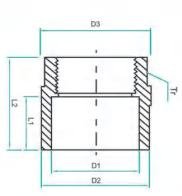
SIZE Number D1 D2 D3 L1 L2
DN15 NJ15 20.3 26.3 28.49 16.5 33.45
DN20 NJ20 25.3 31.9 34.66 19 36.99
DN25 NJ25 32.35 39.95 42.04 22.5 42.2
DN32 NJ32 40.4 49.8 52 26.5 49.09
DN40 NJ40 50.45 60.25 62.64 31.5 53.93
DN50 NJ50 63.5 75.9 78.11 38 65.49
DN65 NJ65 75.5 88.91 91.16 44 75.49
DN80 NJ80 90.55 105.15 107.09 73.11 86.51
DN100 NJ100 110.6 127.39 129.88 84.27 102.89

Frequently Asked Questions (FAQs)

Q1: What is the primary difference between a female connector and a male connector?
A female connector is designed with sockets or receptacles to receivethe protruding pins or plugs of a male connector. Together, they form a mated pair that establishes the connection. The key distinction lies in the female connector being the “receiver” and the male connector being the “insert” .
Q2: Are all female connectors the same?
No, female connectors vary significantly in size, shape, pin arrangement, and electrical specifications to meet the needs of different applications and industries. It is crucial to select the correct type to ensure compatibility and performance .
Q3: What should I consider when selecting a female connector?
Key factors include performance parameters​ like current, voltage, and operating temperature requirements, as well as physical parameters​ such as connector type, pitch, pin count, termination style, and material composition to ensure it suits the intended design and environmental conditions .
Q4: Can female connectors be customized?
Yes, many manufacturers offer customization options for attributes like dimensions, number of pins, colors, and materials to meet specific application requirements .
Q5: How do female connectors ensure reliable data transfer?
Connectors like female SATA ports in computers are designed for low loss and stable impedance. They provide a secure interface that ensures accurate data transmission between components, such as from a hard drive to the motherboard .


daiwang@skrpipe.com
+86 153-703-27218
Whatsapp