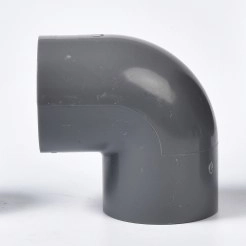
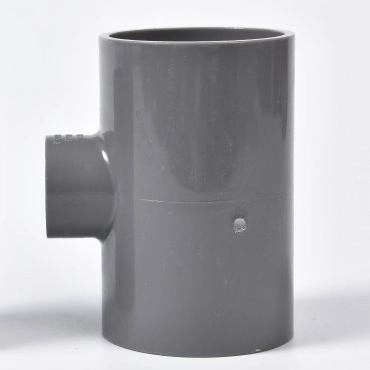
Reducing Tee

Send Inquiry

Overview of Reducing Tee

A Reducing Tee​ is a precision-engineered pipe fitting designed to connect three pipes of different diameters, facilitating flow division or combination at 90-degree angles in pipeline systems . This specialized component features a T-shaped configuration​ with one branch size different from the two opposing outlets, allowing seamless transitions between pipe sizes while maintaining optimal flow characteristics . Manufactured to international standards including ASME B16.9, ANSI B16.11, and DIN 2605, reducing tees are available in materials ranging from carbon steel and stainless steel to PVC and specialty alloys, catering to diverse industrial applications from chemical processing to water distribution systems .
Reducing tees withstand operating temperatures from -196°C to 800°C and pressures up to 3000 PSI, depending on material specifications and wall thickness schedules (SCH40, SCH80, etc.) . Their robust construction ensures reliable performance in demanding environments where corrosion resistance, pressure integrity, and long-term durability are essential . With size combinations spanning ½” to 48″ (DN15 to DN1200), these fittings provide essential solutions for system expansions, flow distribution, and pipe size transitions across industrial, commercial, and municipal piping networks . The reducing design minimizes turbulence and pressure drop while offering installation flexibility through butt weld, socket weld, or threaded connection methods .

Key Features of Reducing Tee

Optimized Flow Distribution

Reducing tees feature hydraulically efficient designs​ that minimize turbulence and pressure loss at flow diversion points . The smooth interior transition between different diameters maintains fluid velocity while reducing cavitation potential, making them ideal for applications requiring balanced flow distribution between different line sizes . Computational fluid dynamics (CFD) optimized geometries ensure minimal resistance during branch connections .

Robust Construction and Material Versatility

Constructed from high-strength materials​ including carbon steel (ASTM A234), stainless steel (304/316), duplex steels, and corrosion-resistant alloys, reducing tees maintain structural integrity under extreme pressure and temperature conditions . Available in seamless and welded variants, these fittings undergo rigorous quality testing including hydrostatic tests, PMI verification, and dimensional checks to ensure compliance with international standards . Material selection covers applications from standard water systems to corrosive chemical processing environments .

Pressure and Temperature Resilience

Engineered for demanding operating conditions, reducing tees withstand pressures up to 3000 PSI and temperatures ranging from cryogenic -196°C to high-temperature 800°C applications . The uniform wall thickness distribution and reinforced branch areas provide enhanced stress resistance, particularly at critical junction points where pressure fluctuations are common . Schedule variations (SCH40, SCH80, SCH160) accommodate different pressure requirements while maintaining flow efficiency .

Installation Flexibility and Compatibility

Reducing tees support multiple connection methods​ including butt weld, socket weld, threaded, and socket fusion, enabling seamless integration into existing piping systems . Standardized dimensions per ASME B16.9 ensure compatibility with various piping components, while specialized designs accommodate unique application requirements . The versatility in connection options simplifies maintenance, modifications, and system expansions across industrial facilities .

Corrosion and Abrasion Resistance

Manufactured from corrosion-resistant materials​ with optional coatings and linings, reducing tees excel in aggressive media applications including chemical processing, mining slurry transport, and offshore operations . Duplex and super duplex stainless steel variants provide exceptional resistance to pitting, crevice corrosion, and stress corrosion cracking in chloride-rich environments, while carbon steel tees with appropriate coatings handle abrasive slurries in mining applications .

Technical Specifications

Table: Standard Reducing Tee Specifications
Parameter
Specification Range
Standards
Size Range
½” to 48″ (DN15 to DN1200)
ASME B16.9, ANSI B16.11
Pressure Rating
SCH40 to SCH160 (150 to 3000 PSI)
ASME pressure classes
Temperature Range
-196°C to 800°C
Material-dependent
Material Grades
Carbon Steel, Stainless Steel, Alloy Steel, Nickel Alloys
ASTM/ASME standards
Connection Types
Butt Weld, Socket Weld, Threaded, Socket Fusion
Application-specific
Standards Compliance
ASME B16.9, ANSI B16.11, DIN 2605, MSS SP-43
International certifications

Typical Applications of Reducing Tee

Chemical and Process Industries

In chemical plants and refineries, reducing tees facilitate flow distribution between different process lines​ where varying pipe sizes intersect . Stainless steel and alloy variants handle corrosive chemicals, acids, and high-purity materials while maintaining system integrity under fluctuating temperatures and pressures . The precise diameter transitions ensure minimal pressure loss during branch connections, optimizing process efficiency in complex piping networks .

Water and Wastewater Treatment

Municipal water systems utilize reducing tees for efficient flow division​ in treatment plants, distribution networks, and pumping stations . The size transition capability allows integration of smaller branch lines to main headers while maintaining hydraulic efficiency, with materials selected for corrosion resistance and long service life in potable water applications . Abrasion-resistant materials handle slurry and sediment-laden flows in wastewater treatment processes .

Oil and Gas Pipeline Systems

In upstream, midstream, and downstream operations, reducing tees provide critical flow control​ at pipeline junctions where different line sizes converge . High-yield strength carbon steel and corrosion-resistant alloy tees withstand the demanding pressure, temperature, and corrosive conditions characteristic of hydrocarbon transport . Full penetration welds and rigorous inspection protocols ensure reliability in critical service applications .

Power Generation and HVAC Systems

Power plants employ reducing tees in cooling water circuits, fuel systems, and steam lines​ where flow division to auxiliary equipment requires size adaptations . The temperature and pressure capabilities of SCH160 tees make them suitable for high-energy systems, while copper-nickel and stainless steel variants handle corrosive media in cooling and condensate applications . HVAC systems utilize reducing tees for refrigerant line distribution and hydronic system balancing .

Mining and Industrial Applications

In mining operations, reducing tees handle abrasive slurry transport​ and dewatering applications, with material selections ranging from wear-resistant steels to specialized alloys . The robust construction withstands abrasive wear while maintaining flow characteristics in slurry transport systems, with reinforced designs available for high-abrasion applications . Industrial plants utilize reducing tees for compressed air, process water, and utility distribution networks .

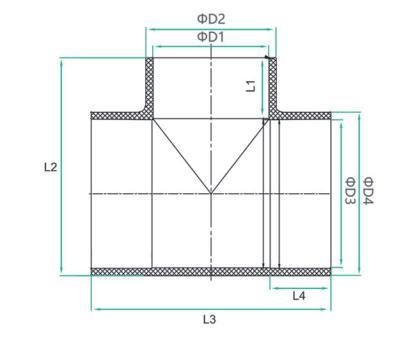
SIZE NO. D1 D2 L1 L2 L3 D3 D4 L4
DN25x15 Y3T25x15 20.3 26.3 16.5 53.7 68 32.25 39.95 22.5
DN25x20 Y3T25x20 25.3 31.9 17 64.3 81 40.5 47.5 26.5
DN25x25 Y3T25x25 25.3 31.9 17 74.4 91 50.45 57.5 31.5
DN30x25 Y3T30x25 32.5 38.5 22.5 58 98 50.45 50.25 31.5
DN30x25 Y3T50x25 32.5 39.95 22.5 93 111 63.5 75.9 38
DN30x32 Y3T50x32 40.4 49.8 26.5 97 119 63.5 75.9 38
DN35x25 Y3T65x25 32.5 39.95 22.5 105.6 123 75.5 88.91 44
DN35x40 Y3T65x40 50.45 60.25 31.5 115 141 75.5 88.91 44
DN80x25 Y3T80x25 32.5 39.95 22.5 120.8 137.9 90.55 105.15 51.5
DN80x40 Y3T80x40 50.45 60.25 31.5 130.5 156 90.55 105.15 51.5
DN80x50 Y3T80x50 63.5 75.9 38 137 169 90.55 105.15 31.5
DN100x25 Y3T100x25 32.5 39.95 22.5 142.6 158 110.6 127.39 61.5
DN100x50 Y3T100x50 63.5 75.9 38 156 189 110.6 127.39 61.5
DN100x65 Y3T100x65 75.5 88.91 34 164.2 200.96 110.6 127.39 61.5
DN125x25 Y3T125x25 32.5 39.95 22.5 180 197 120.6 140.3 76
DN125x50 Y3T125x50 90.55 106.15 51.5 203.8 246 140 161.4 76
DN150x50 Y3T150x50 63.5 75.9 38 211.5 240.5 140.7 184.5 86.5
DN150x100 Y3T125x100 110.6 127.39 61.5 234.3 287.5 160.7 184.5 86.5
dn200x110 Y3T200x110 110 127.5 61.5 277.5 356 201.1 228.1 106.2
dn200x160 Y3T200x160 160 184.9 86.5 302.35 376 200 228.1 106.2
DN200x100 Y3T200x100 110.6 127.39 61.5 302.3 352 226.2 253.8 118.5
DN200x150 Y3T200x150 160.7 184.5 86.5 327.2 401.5 226.2 253.8 118.5
dn250x110 Y3T250x110 110 127.5 61.5 330.5 429 250 283.4 131.5
dn250x160 Y3T250x160 160 184.9 86.5 355.2 429 250 283.4 131.5
DN300x100 Y3T300x100 226.2 253.8 120 442 525 287.5 315.3 147
DN300x200 Y3T300x200 226.2 253.8 120 440 564 317.5 355 147
DN300x150 Y3T300x150 160.8 185 87 427 564 317.5 355 165
DN350x300 Y3T350x300 316.7 355 165 546 696 356.8 395 185
DN350x200 Y3T350x200 226.2 253.8 120 501 696 356.8 395 185
DN400x300 Y3T400x300 316.7 355 165 593 740 402 442 208
DN400x200 Y3T400x200 226.2 253.8 120 548 740 402 442 208

Frequently Asked Questions (FAQs)

Q1: What factors determine the selection between equal tees and reducing tees?
The decision depends on system hydraulic requirements​ and piping layout . Equal tees maintain consistent pipe sizes across all three connections, while reducing tees accommodate different branch and run sizes, typically with the branch size smaller than the main run . Reducing tees are specified when flow division requires size reduction to smaller distribution lines or when connecting equipment with different connection sizes .
Q2: How does reducing tee selection impact system pressure rating?
Reducing tee pressure capacity depends on material composition, wall thickness, and manufacturing standards​ . SCH80 and SCH160 tees provide higher pressure ratings than SCH40 equivalents, with specific ratings determined by the limiting component (typically the branch connection) . Manufacturers provide pressure-temperature ratings per ASME B16.9 guidelines, with derating factors applied for elevated temperature service .
Q3: What are the key considerations for installing reducing tees in high-vibration applications?
In high-vibration environments, proper support and welding techniques​ are critical for reducing tee longevity . Butt weld connections with full penetration welds provide superior fatigue resistance compared to threaded or socket weld alternatives . Additional support near the branch connection and stress distribution considerations help mitigate vibration-induced fatigue at the junction area, particularly in pulsating flow applications .
Q4: Can reducing tees be customized for specific application requirements?
Yes, manufacturers offer comprehensive customization options​ including non-standard size combinations, special material grades, reinforced branch designs, and specialized coatings . Custom reducing tees can be engineered for extreme temperatures, corrosive media, abrasive slurries, or specific pressure classes, with documentation including material test reports and compliance certificates for regulated applications .
Q5: What quality assurance measures apply to reducing tee manufacturing?
Reputable manufacturers implement stringent quality control​ including material certification, dimensional verification, hydrostatic testing, and non-destructive examination (RT, UT, MT, PT) . Compliance with international standards (ASME B16.9, ISO 9001) ensures consistent quality, with additional certifications available for critical applications in nuclear, power generation, and oil and gas industries .
daiwang@skrpipe.com
+86 153-703-27218
Whatsapp