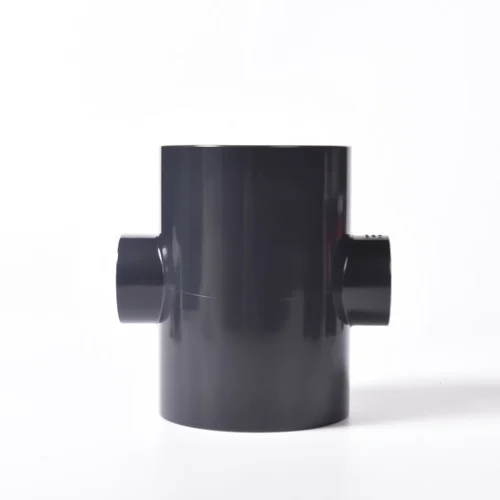
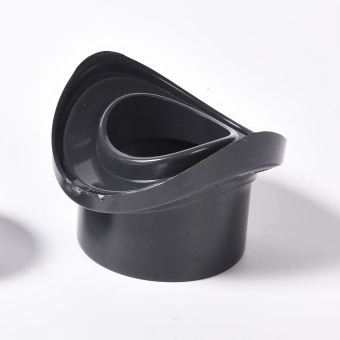
Saddle Joint

Send Inquiry

Overview of Saddle Joint

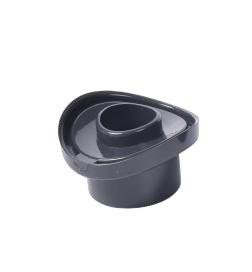
A Saddle Joint​ is a specialized pipe fitting designed to create secure branch connections on existing pipelines without requiring system shutdown or disassembly. Engineered for both solvent-cement and gasketed piping systems, this innovative component enables efficient flow diversion in water supply, chemical processing, irrigation, and industrial applications . The joint features a saddle-shaped design that conforms to the main pipe’s curvature, utilizing precision-machined surfaces and O-ring seals to ensure leak-proof performance under pressures up to 235 PSI . Available in sizes compatible with IPS standards from ¾” to 1½”, saddle joints support both permanent and serviceable connections, with certain models allowing live (“hot-tap”) installations on pressurized lines . Their corrosion-resistant materials—including PVC, stainless steel, and specialty alloys—provide a service life exceeding 50 years, making them a preferred solution for pipeline modifications and branch additions .

Key Features of Saddle Joint

1. Leak-Proof Sealing Mechanism

Saddle joints incorporate dual O-ring seals​ (upper and lower) and a saddle body that distributes pressure evenly around the pipe circumference. This design prevents fluid ingress and maintains integrity under system vibrations and pressure surges . The sealing system is effective for both liquid and gas applications, including potable water and chemical transport .

2. Hot-Tap Capability

Specialized saddle joints enable live pipeline connections​ without draining the system. An integrated cutter threads through the saddle body to create an opening, with the cut section retained internally to prevent contamination . This feature is invaluable in water distribution, industrial processing, and irrigation systems where uninterrupted operation is critical .

3. Corrosion and Chemical Resistance

Manufactured from materials such as PVC, CPVC, or stainless steel, saddle joints resist degradation from acids, alkalis, and UV exposure . This makes them suitable for underground installation, chemical handling, and outdoor applications where environmental factors could compromise ordinary fittings .

4. Versatile Installation Options

Saddle joints support multiple connection methods: solvent cementing​ for permanent bonds, gasketed joints​ for removable connections, and mechanical clamping​ for rapid deployment . This flexibility allows adaptation to various project requirements, from emergency repairs to planned system expansions .

5. Full-Flow Design

The internal geometry of saddle joints minimizes flow turbulence and pressure drop, maintaining system efficiency. Unlike traditional tee fittings that require full pipe cutting, saddle joints preserve the main line’s structural continuity while adding branch connections .

Typical Applications of Saddle Joint

Water Supply Systems

Saddle joints are widely used in municipal water networks​ to add service connections without interrupting supply. Their leak-proof design meets potable water standards, ensuring safe, long-term performance .

Industrial Process Piping

In chemical plants and manufacturing facilities, saddle joints facilitate branch lines for equipment or instrumentation. Their corrosion resistance handles aggressive media, while hot-tap capabilities minimize production downtime .

Irrigation and Agriculture

Saddle joints simplify system expansions​ in agricultural irrigation by allowing new branches to be added to pressurized lines. Their rugged construction withstands outdoor exposure and soil stresses .

Mining and Dewatering

For mine dewatering and slurry transport, saddle joints provide reliable connections that resist abrasion and chemical corrosion. Mechanical clamp-on variants enable quick installation in remote or challenging environments .

Pipeline Modifications and Repairs

Saddle joints serve as reinforcement patches​ for damaged pipes, sealing cracks or holes while adding a new connection point. This dual functionality reduces repair costs and time .

Technical Specifications

Table: Standard Saddle Joint Specifications
Parameter
Specification
Size Range
¾” to 1½” (socket/spigot); adapts to IPS pipe standards
Pressure Rating
Up to 235 PSI (standard); 200 PSI (large sizes)
Temperature Range
-20°C to 75°C (PVC); higher ranges for metal alloys
Materials
PVC, CPVC, Stainless Steel, Coated Metals
Sealing Method
O-ring compression; solvent-weld options
Standards Compliance
ISO 9001, NSF/ANSI 61 (potable water)

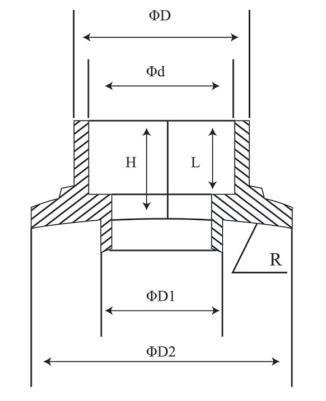
公称尺寸φ φ0 φd φ D1 φ D2 R H L
φ75/32 40 32 35 70 37.5 36 25
φ90/32 40 32 28 60 45 26 22
φ90/50 60 50 55 85 45 43 31
φ110/32 40 32 29 60 55 26 22
φ110/50 60 50 55 100 55 45 31
φ110/63 72 63 60 100 55 42 37
φ140/32 40 32 29 60 70 26 22
φ140/50 60 50 55 100 70 45 41
φ140/63 72 63 55 100 70 42 37
φ160/32 40 32 29 60 80 26 22
φ160/50 60 50 55 100 80 45 31
φ160/63 72 63 55 100 80 42 38
φ250/32 40 32 29 60 112.5 26 22
φ250/50 60 50 55 100 112.5 45 31
φ250/63 72 63 40 100 112.5 42 37
φ325/50 86 76 70 115 112.5 42 38
φ325/90 104 90 90 170 112.5 70 51
φ350/63 72 63 60 100 125 42 37
φ350/75 86 75 70 115 125 42 38
φ380/32 40 32 29 60 140 26 22
φ380/50 60 50 55 100 140 45 31
φ380/63 72 63 60 100 140 42 37
φ280/75 86 75 70 115 140 42 38
φ315/32 40 32 29 60 157.5 26 22
φ315/50 60 50 55 100 157.5 45 31
φ315/63 74 63 60 100 157.5 42 37
φ315/75 86 75 70 115 157.5 42 38
φ315/90 104 90 90 170 157.5 74 51

Frequently Asked Questions (FAQs)

Q1: Can saddle joints be installed on pressurized pipelines?
Yes, hot-tap saddle joints are designed for live installation. The integral cutter creates an opening while internal mechanisms prevent leakage. Post-installation, a cap or valve secures the branch .
Q2: How are saddle joints sealed to the main pipe?
Sealing is achieved via O-rings (for mechanical joints) or solvent cement (for welded versions). The saddle’s contoured surface ensures even pressure distribution, preventing stress concentration .
Q3: What tools are required for installation?
Basic tools include a ratchet drive for the cutter, O-ring lubricant, and cleaning supplies. For solvent-weld joints, primer and cement are needed. No specialized equipment is necessary for most sizes .
Q4: Are saddle joints reusable?
Mechanical clamp-on saddle joints can be repositioned or removed, while solvent-welded types are permanent. Reusability depends on the specific design and material .
Q5: Do saddle joints require maintenance?
O-ring seals may need periodic inspection for wear, especially in dynamic or high-temperature applications. However, most saddle joints are maintenance-free under standard conditions .
daiwang@skrpipe.com
+86 153-703-27218
Whatsapp